
Oklo
A US weapons grade plutonium story

The Department of Energy is moving to make roughly 19.7 metric tons of surplus weapons‑grade plutonium available to five private companies under a new Surplus Plutonium Utilization Program, created under the authority of Executive Order 14302, signed May 23, 2025. The five companies are Oklo Inc. (CA), Exodys Energy (NY), SHINE Technologies (WI), Standard Nuclear (TN/ID), and Flibe Energy (AL). All proposed processing and use are inside the United States, and as of late May 2026 no final contracts have been signed — only “advanced negotiations” with DOE.[federalregister]
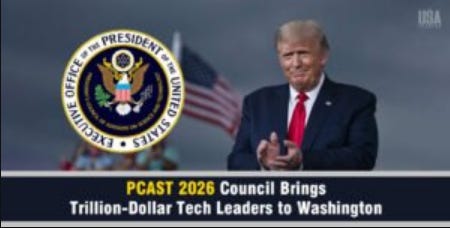
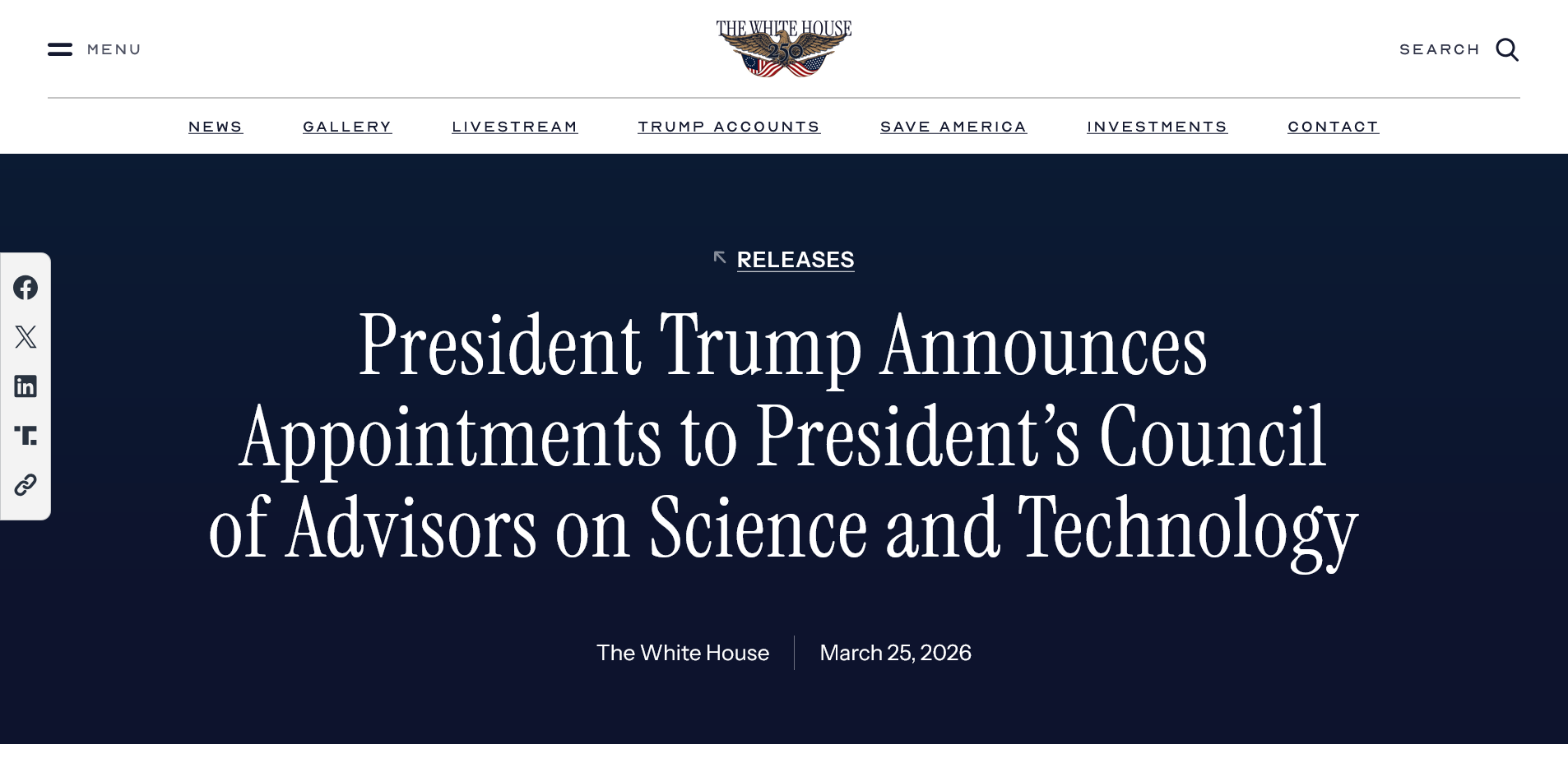
At the same time, the President’s Council of Advisors on Science and Technology (PCAST) – operating under a broad science, technology, and nuclear‑energy mandate – was re‑established by Trump executive order in January 2025, with the first 13 members announced in March 2026. The council is co‑chaired by David Sacks and White House science adviser / OSTP Director Michael Kratsios, who previously worked for Peter Thiel at Thiel Capital. The initial lineup (13 total) includes Jensen Huang, Mark Zuckerberg, Larry Ellison, Sergey Brin, Michael Dell, Marc Andreessen, Safra Catz, Fred Ehrsam, John Martinis, David Friedberg, Bob Mumgaard, Lisa Su, and Oklo Inc. CEO Jacob DeWitte.[whitehouse]
The DeWitte Timeline
Oklo’s founder and CEO Jacob DeWitte is the person who ultimately replaced Sam Altman as chairman of Oklo’s board, after Altman stepped down in April 2025. DeWitte and his wife, Caroline Cochran DeWitte, co‑founded Oklo in 2013.[oklo]
On March 25, 2026, Trump appointed DeWitte to PCAST. Roughly 60 days later, on May 26, 2026, Oklo was selected by DOE for advanced negotiations to receive a share of the surplus weapons‑grade plutonium under the Surplus Plutonium Utilization Program. In plain terms: DeWitte is simultaneously advising the President on science and technology while his company is in active negotiations with DOE — the same department that provides PCAST’s funding and administrative support.[ans]
To Oklo’s credit, the company issued a Business Wire press release confirming DeWitte’s PCAST appointment and noting that he is both CEO and co‑founder of Oklo. In April 2025, Sam Altman – Oklo’s long‑time board chair and the architect of its SPAC deal – stepped down “to avoid a conflict of interest” because Oklo was entering power‑supply negotiations with OpenAI, Altman’s own company.[oklo]
Then on April 14, 2026, DeWitte was also appointed to the Board of Directors of Blykalla, a Swedish advanced‑nuclear company and Oklo strategic partner. A month later, on May 26, 2026, DOE publicly confirmed Oklo’s selection for advanced negotiations under the surplus plutonium program.[oklo]
Built Around Plutonium from Day One
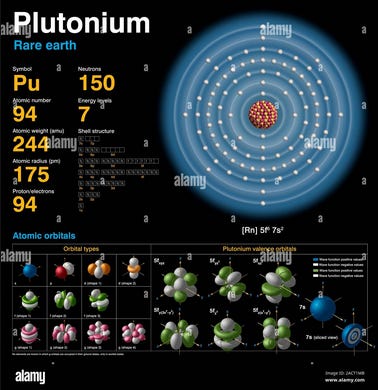
DeWitte’s PhD work at MIT included core design and analysis for plutonium destruction scenarios using the PRISM sodium‑cooled fast reactor — the General Electric design that is the conceptual ancestor of Oklo’s Aurora reactor. He then founded a company explicitly commercializing that design lineage, took it public via a SPAC chaired by his largest backer (Sam Altman), replaced Altman as chair, and is now advising the President on science and technology policy while negotiating to use the same plutonium stockpile his doctoral work modeled.[leviathanencyclopedia]
Oklo today is a pre‑commercial, deeply government‑integrated nuclear startup sitting at the intersection of some of the most sensitive arenas in U.S. nuclear policy: weapons‑material disposition, military energy, AI data‑center power, and federal research infrastructure. The same founder‑CEO steering Oklo’s strategy is also sitting on PCAST, shaping the policy framework that governs his own company’s business.[world-nuclear-news]
The Chris Wright Connection
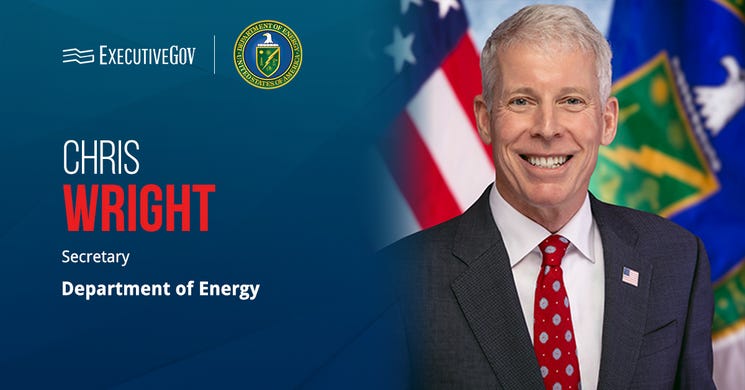
As if Oklo’s position weren’t sensitive enough, current DOE Energy Secretary Chris Wright sat on Oklo’s Board of Directors before his Senate confirmation in early 2025. DOE has said he never held Oklo stock and has formally recused himself from Oklo‑specific decisions, but the path is clear: from Oklo board member to cabinet official running the agency that now oversees multiple programs Oklo benefits from.[reuters]
How Many Programs Is Oklo in?
Oklo is not just in one program. It is embedded in four major federal nuclear initiatives at the same time:
DOE Nuclear Reactor Pilot Program (RPP):
Oklo was selected for two projects – the Aurora reactor at Idaho National Laboratory (INL) and a second “Pluto” reactor project under the same pilot framework.[world-nuclear-news]Project Janus (Army/DOE microreactors):
Oklo is among the companies participating in the Army’s Janus microreactor ecosystem, which aims to deploy up to a dozen microreactors across nine U.S. military installations by 2027–2028.[ans]U.S. Air Force Microreactor Pilot:
In June 2025, following an earlier rescinded award, the Department of the Air Force and DLA Energy issued a new Notice of Intent to Award to Oklo to site, develop, and operate a licensed microreactor at Eielson Air Force Base in Alaska under a 30‑year PPA and land lease.[oklo]Surplus Plutonium Utilization Program:
Oklo was selected on May 26, 2026 for advanced negotiations to receive weapons‑grade plutonium as reactor fuel feedstock under FOA DE‑FOA‑0003594.[reuters]
On top of that, Oklo is in DOE’s Advanced Nuclear Fuel Line Pilot Program for its Aurora Fuel Fabrication Facility (A3F) at INL, and holds a DOE site use permit and access to recycled EBR‑II fuel from INL.[oklo]
NRC Denial and the DOE Bypass
In January 2022, the Nuclear Regulatory Commission denied Oklo’s first combined license application (COLA) for Aurora at INL, citing “significant information gaps” in its description of accident scenarios and in its classification of safety systems and components. The NRC emphasized the denial was “without prejudice” – Oklo could reapply – but it did not reach a full safety conclusion on the design.[nrc]
Instead of waiting for a fresh NRC approval, Oklo’s first commercial Aurora-INL reactor is now advancing under a DOE‑only authorization pathway created by the Reactor Pilot Program and the Fuel Line Pilot Program. That sequencing — denied by the independent regulator, then moved forward under a DOE‑only framework — puts the U.S. in a contentious position, looking a lot like safety risk subordinated to special interests and schedule pressure.[energyonline]
Oklo’s Footprint – All Domestic
All of Oklo’s known projects are planned on U.S. soil. The primary sites are:
Idaho National Laboratory (Butte County, Idaho) – Aurora‑INL reactor plus the Aurora Fuel Fabrication Facility (A3F).[world-nuclear-news]
Eielson Air Force Base (Fairbanks, Alaska) – Air Force microreactor project, contingent on NRC licensing.[reuters]
Oak Ridge, Tennessee (East Tennessee Technology Park) – Planned fuel recycling and plutonium fuel fabrication facility in partnership with newcleo.[energy]
Pike County, Ohio – Planned 1.2 GW nuclear power campus to support Meta’s Prometheus AI data‑center complex (prepayment agreement).[utilitydive]
Permian Basin, Midland, Texas – Planned 50 MW plant for Diamondback Energy, currently under a nonbinding LOI.[oklo]
If the plutonium negotiations result in a signed agreement, Oklo and newcleo would build and operate a weapons‑grade plutonium fuel fabrication facility in Oak Ridge, TN. It would be the first private facility of its kind in U.S. history, located in the Knoxville/Oak Ridge metro region (Knox and Anderson Counties, combined population ~300,000 within a 25‑mile radius). It would fall under stringent DOE safeguards and, for civilian portions, IAEA oversight — but many of those protocols, including exact material accountancy standards, are still being negotiated.[journalrecord]
The 202(c) Coal Orders – Setting the Energy Backdrop
Another important part of the backdrop is how this administration is wielding Section 202(c) of the Federal Power Act. Since May 2025, DOE has issued more than 40 emergency orders and extensions — more than in any comparable period since the law was enacted.[powermag]
Under 16 U.S.C. § 824a(c), the Secretary of Energy can order power plants to continue operating during an “emergency” that causes a “shortage of electric energy or a shortage of facilities for the generation of electric energy.” Each order lasts up to 90 days but can be renewed indefinitely. Crucially, these orders can exempt plants from federal, state, and local environmental regulations — air emissions and pollution limits included — for as long as the order is in effect.[statepowerproject]
Historically, 202(c) orders were rare, typically issued at the request of utilities or grid operators in response to events like hurricanes or extreme heat. The Trump/Wright DOE has used them proactively, often without a request from grid operators, to block scheduled coal‑plant retirements and keep aging baseload units online in the name of “reliability.”[washingtonenergylaw]
Oklo’s Balance Sheet vs. Its Access
Oklo’s financials tell a stark story. The company has:
Zero operating reactors,
Zero commercial revenue from power sales, and
A net loss of roughly $105.7 million in FY2025, on operating expenses of about $139.3 million.[moomoo]
Yet Oklo simultaneously holds or is negotiating:
A DOE site use permit at INL and access to EBR‑II fuel;[world-nuclear-news]
A Reactor Pilot Program OTA;[energy]
A slot in DOE’s Advanced Nuclear Fuel Line Pilot Program;[oklo]
A U.S. Air Force NOITA (the second, after the first was rescinded in 2023);[canarymedia]
Selection for the Surplus Plutonium Utilization Program;[ans]
A share of DOE’s spent fuel recycling R&D grant funding;[ans]
A role in the Army’s Project Janus ecosystem.[partnershipforglobalsecurity]
All of that is in place before a single kilowatt of commercial nuclear electricity has been delivered to any customer.

Ethics and Oversight – The Dog That Hasn’t Barked
Even with this dense overlap of federal programs, weapons‑grade material access, and high‑level advisory roles, no Congressional Ethics Committee investigation has been publicly announced into Jacob DeWitte’s PCAST–Oklo overlap. The only formal ethics challenge on record so far is Sen. Ed Markey’s September 2025 letter raising conflict‑of‑interest concerns about Energy Secretary Chris Wright’s ties to Oklo and about the plutonium transfer program more broadly.[eenews]
For now the most consequential nuclear startup in America remains both a major beneficiary of federal nuclear policy and a direct participant in advising on that policy — with plutonium, AI data centers, and military bases all on the table at once.
As Americans who are currently under the threat of a military merger with Israel we must ask ourselves, is this a door we want opened? -should we open it at all when we know who may walk thru it and maybe never walk out.